- Northern
- Upper East
- Upper West
- Sankofa Programme
- Traditional extraction
- GEPA certificate of origin
- Tema
01 / The shea belt
Wild trees, not plantations.
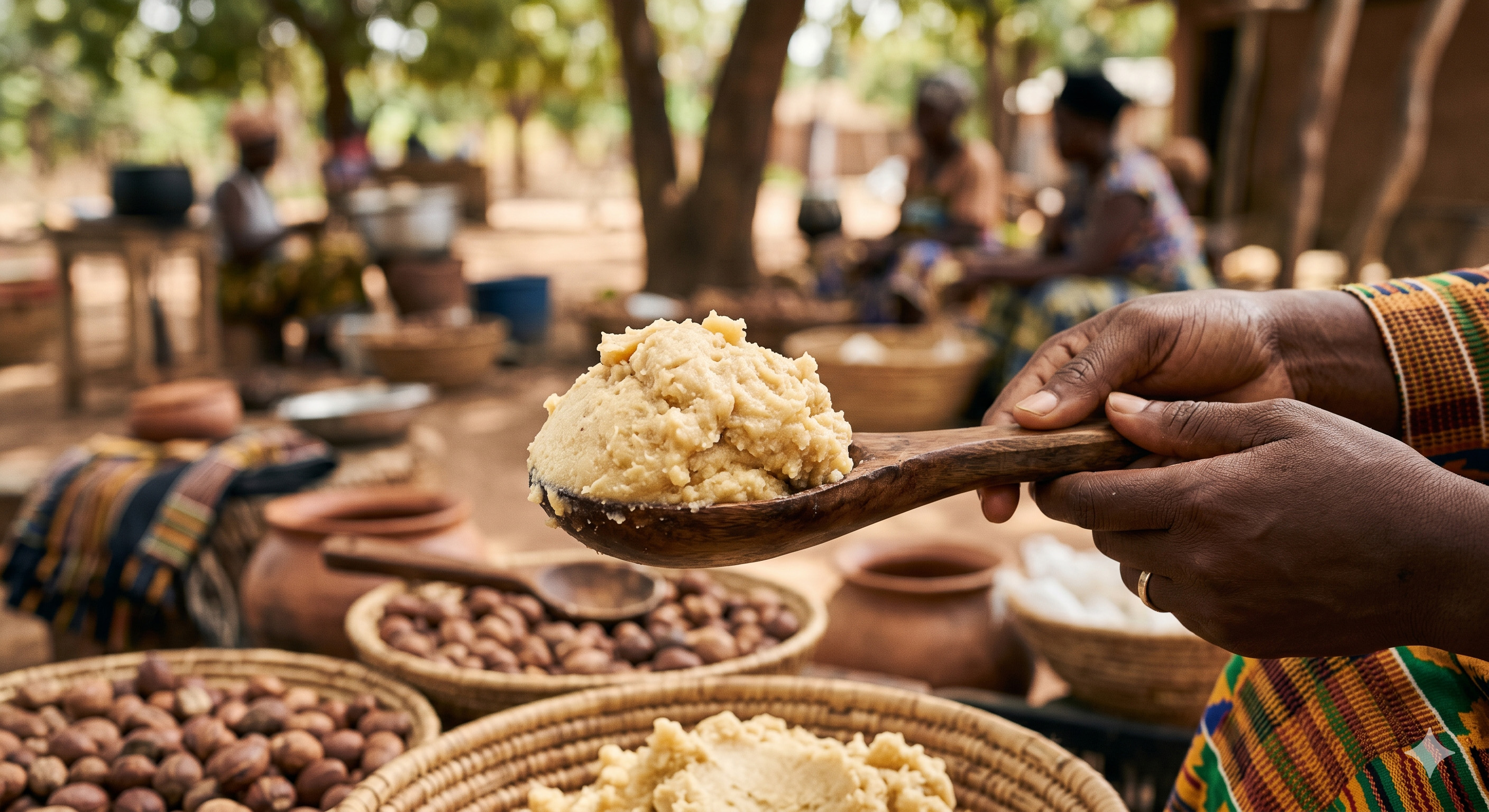
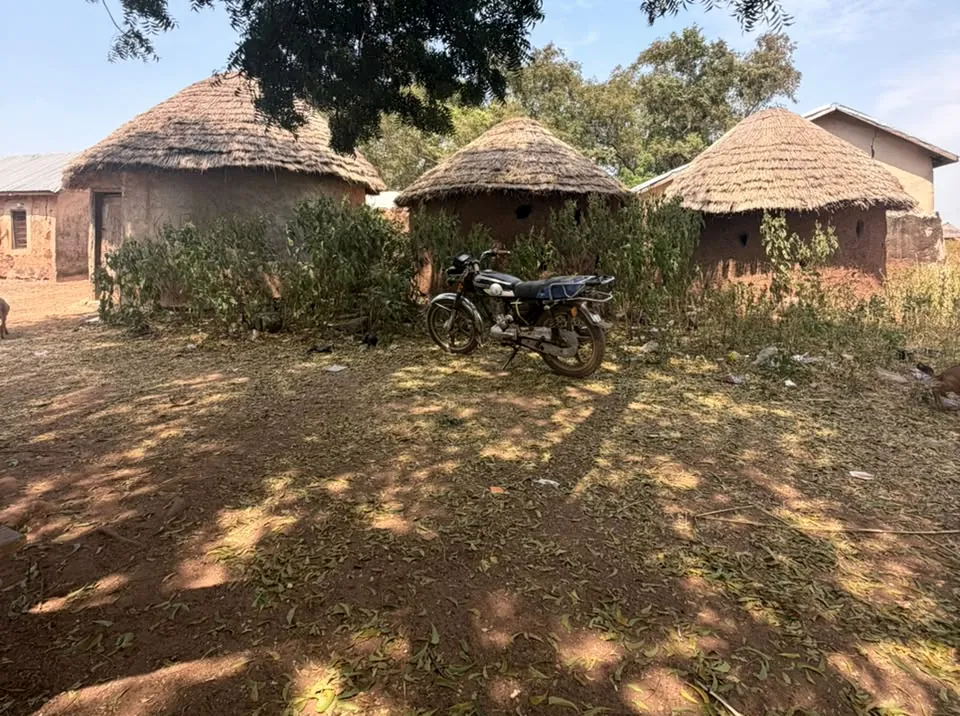
Vitellaria paradoxa grows wild across the savannah of northern Ghana. A tree takes around fifteen years to bear fruit.
About the shea belt
Shea butter is the fat of the shea kernel. The tree grows across a belt of West African savannah from southern Mali and Burkina Faso through northern Ghana to Côte d'Ivoire and Togo; in Ghana, in the Northern, Upper East and Upper West regions. It reaches commercial yield about a decade after first fruiting, so supply rests on trees that have stood for generations and on the communities, mostly women, who gather and process the nuts.
Whyte Leafe Group sources from named gathering communities in northern Ghana, with supplementary supply from the wider belt where the kernel's lipid profile is consistent.
02 / Sourcing
The Sankofa Programme.
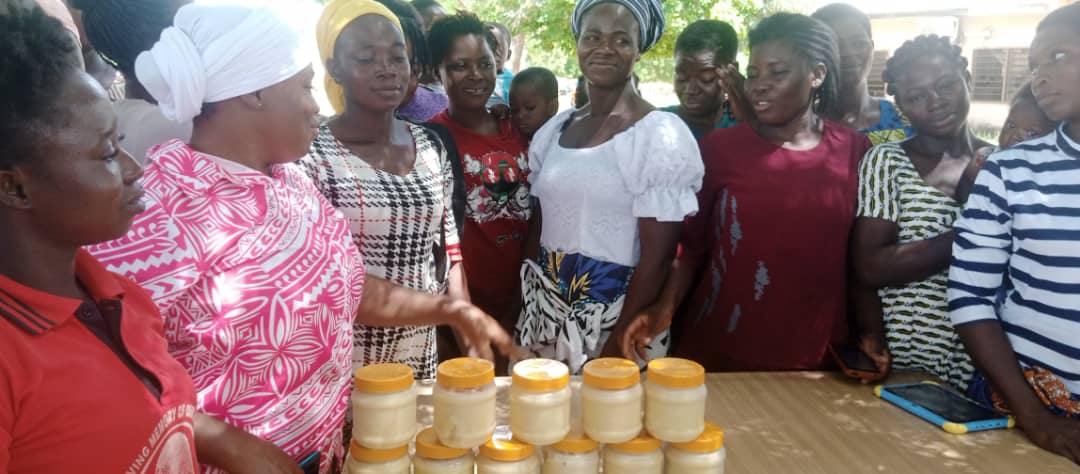
A governed, commercial supply network. A defined share of export revenue goes back into producer infrastructure.
Supply reliability
Aggregated volume, standard grading.
Quality consistency
Training tied to export outcomes.
Value retention
Revenue reinvested at origin.
Traceability
Provenance from producers to port.
How Sankofa works
Sankofa is not a cooperative, a charity or an NGO programme. Independent producers in Ghana supply under defined quality standards, with rejection and remediation rules, and Whyte Leafe Group manages the buyer relationship, export logistics, quality assurance and compliance. For a buyer, that means volume you can plan around, a consistent grade from season to season, and documented provenance. The Whyte Leafe Group story.
03 / Nut to butter
Roasted, ground, kneaded by hand.
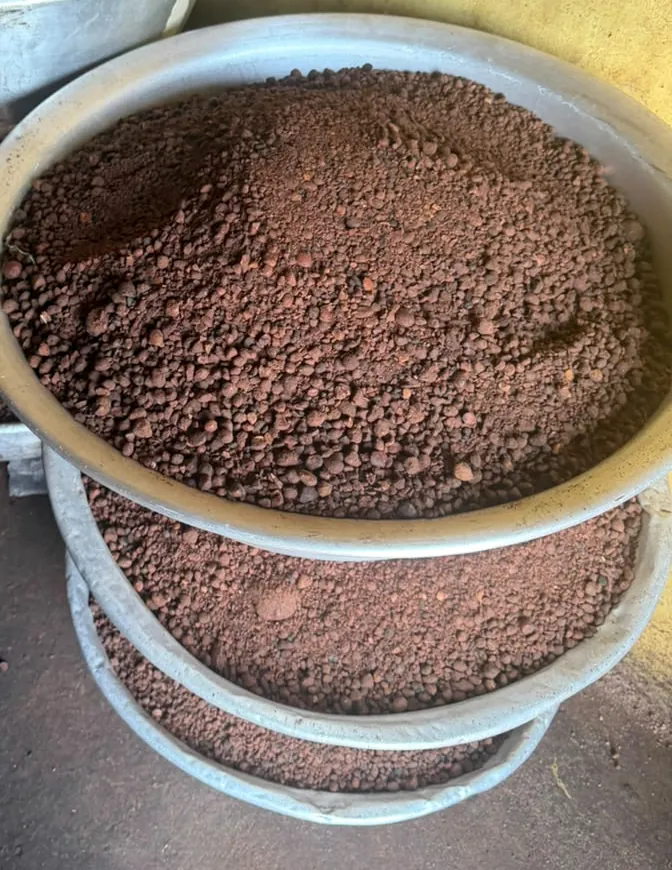
Kneaded with water until the butter separates. No chemical solvents at any stage.
The method
The nuts are gathered by hand, sun-dried, cracked and sorted, then roasted over controlled heat for around forty-five minutes. The roasted kernels are stone-ground into a dense paste and hand-kneaded with water until the butter separates from the solids. The butter is gently melted, filtered through fine cloth and standardised to export specification.
For a neutral, deodorised butter or a shea fraction, Whyte Leafe Group processes Ghana-origin shea in Ghana: see RBD shea butter, shea olein and shea stearin.
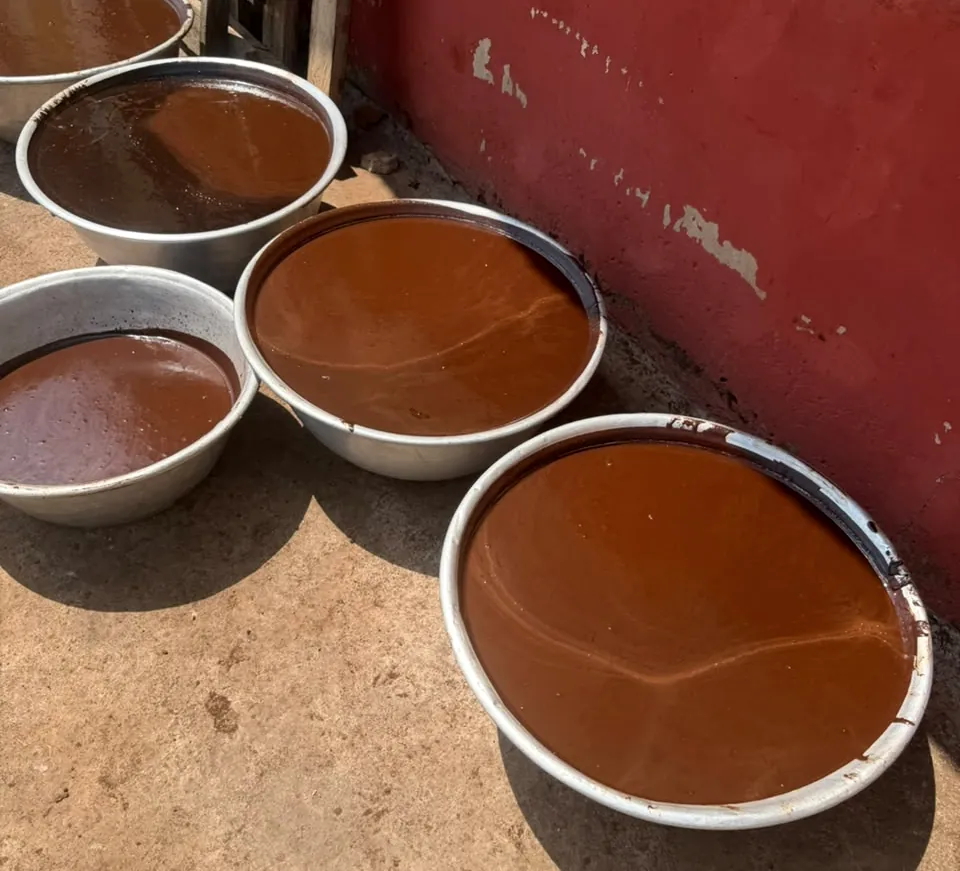
Made where it grows.
04 / Why Ghana origin
A documented origin.
Something a procurement team can put in a supplier file.
One named origin
Republic of Ghana on the certificate.
Certified at export
Certificate of origin issued by GEPA.
Tested per batch
Batch COA on every lot.
Member
Global Shea Alliance and GEPA.
More on origin
Regional aggregation across the wider shea belt is stated in the product specification. Every shipment leaves through Tema, FOB Tema or CIF to your port. Whyte Leafe Group has an office in London and operations in Accra, and under the Sankofa Programme a defined share of export revenue goes back into producer infrastructure in Ghana.
05 / Traceability and export
From producers to Tema.
Provenance documented at every step. Each lot travels with its batch COA and export documents.
Collection
Gathered by hand
Grading
Sorted at aggregation
Extraction
Traditional, no solvents
Quality control
FFA, PV, moisture, more
Export
Documented from Tema
- FOB Tema · CIF
- Batch COA
- SDS
- Certificate of origin
- SGS or Intertek on request
06 / Questions
Ghana shea butter: buyer questions.
Where does Ghanaian shea butter come from?
Ghanaian shea butter comes from the kernels of wild Vitellaria paradoxa trees in the savannah belt of northern Ghana: the Northern, Upper East and Upper West regions. The trees are not planted; the fruit is gathered by hand and the butter is extracted close to where it is collected.
Is Ghana shea butter different from other West African shea?
All West African shea butter comes from the same species, Vitellaria paradoxa, which grows across a belt from Mali and Burkina Faso to Ghana, Côte d'Ivoire and Togo. What a buyer gets from a Ghana-origin supplier is a defined origin, a GEPA-issued certificate of origin, and export through Tema with a batch COA.
How does Whyte Leafe Group source its shea?
Supply is aggregated under the Sankofa Programme, a governed, commercial supply framework. Independent producers in Ghana supply under defined quality standards; Whyte Leafe Group manages grading, testing, export and the buyer relationship, and reinvests a defined share of export revenue in producer infrastructure.
Can I trace a lot of shea butter back to its origin?
Yes. Provenance is documented from the producer network to the port. Each shipment carries a batch COA and a GEPA-issued certificate of origin, and refined shea is linked from feedstock to shipment under one lot code.
Request specifications or discuss supply requirements.
We respond to qualified procurement enquiries within one working day.
info@whyteleafegroup.com · +233 20 341 5505
609 Abayateye St, Nanakrom, East Legon Hills, Accra · 124 City Road, London EC1V 2NX